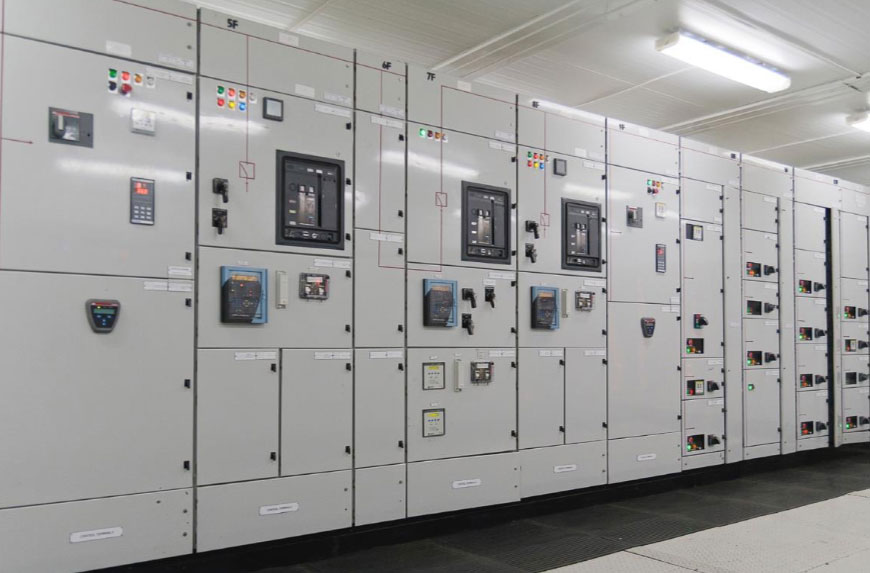
In modern power distribution, the choice of switchgear architecture can profoundly affect reliability, safety, and total cost of ownership. Two dominant technologies, metal enclosed switchgear (MES) and gas insulated switchgear (GIS), compete for the same applications yet differ in construction, performance, and maintenance requirements. Understanding the nuances of each system helps engineers, specifiers, and plant managers make informed decisions that align with operational goals and regulatory standards.
Fundamental Construction Differences
Metal Enclosed Switchgear (MES)
MES relies on air as the primary insulating medium, with all live components housed inside a robust metal enclosure. The enclosure provides mechanical protection and a controlled environment that limits dust and moisture ingress.
- Enclosure material: typically stainless steel or aluminum.
- Insulation: air-cooled, sometimes supplemented with oil or SF₆ for specific functions.
- Cooling: natural convection or forced air fans.
- Maintenance: periodic cleaning and visual inspection of contacts and busbars.
Gas Insulated Switchgear (GIS)
GIS replaces air with a high-dielectric gas, most commonly sulfur hexafluoride (SF₆), to achieve compact insulation. All live parts are sealed within a metal housing filled with the gas, allowing for a significantly reduced footprint.
- Enclosure material: high-strength steel or aluminum alloys.
- Insulation: SF₆ gas at high pressure, providing superior dielectric strength.
- Cooling: gas circulation and heat exchangers.
- Maintenance: minimal, primarily gas monitoring and occasional leak checks.
Performance Characteristics
- Dielectric Strength: GIS offers higher dielectric strength per unit volume, enabling tighter spacing of components.
- Short-Circuit Capability: Both technologies can handle high fault currents, but GIS often achieves higher short-circuit ratings due to superior gas insulation.
- Operational Speed: Mechanical operation times are comparable; however, GIS’s sealed design reduces arcing time during switching.
- Environmental Impact: MES uses no greenhouse gases, while GIS relies on SF₆, which has a high global warming potential. Modern GIS designs incorporate gas recovery systems to mitigate this.
Installation and Space Considerations
Space constraints are a decisive factor in many projects. GIS’s compactness makes it ideal for urban substations, offshore platforms, and retrofit scenarios where footprint is limited. Conversely, MES, with its larger physical dimensions, is well-suited to open-air substations and industrial sites where space is abundant.
Cost Analysis
Initial capital expenditure and lifecycle costs must both be evaluated.
- Capital Cost: GIS typically commands a higher upfront price due to specialized manufacturing and gas handling equipment.
- Installation Cost: Reduced civil works for GIS can offset its higher equipment price, especially in congested locations.
- Maintenance Cost: MES requires regular cleaning and occasional oil replacement, while GIS needs less frequent intervention, focusing mainly on gas monitoring.
- Total Cost of Ownership: When factoring in downtime, maintenance labor, and environmental compliance, GIS can become more economical over a 20-year horizon.
Safety and Reliability
Both switchgear types meet stringent IEC and IEEE safety standards, yet their risk profiles differ.
- MES: Open-air contacts expose operators to higher arc-flash potential; protective barriers and proper grounding are essential.
- GIS: Sealed compartments contain arcs, reducing exposure risk, but gas leaks can create hazardous conditions if not detected promptly.
Choosing the Right Solution
Selection should be guided by a systematic assessment of project requirements.
- Define the electrical rating (voltage, current, fault level).
- Evaluate site constraints (space, environmental conditions, accessibility).
- Consider regulatory and environmental policies regarding SF₆ usage.
- Perform a lifecycle cost analysis that includes installation, operation, and de-commissioning.
- Consult technical documentation and expert guidance to validate the choice.
For a deeper dive into medium-voltage options that balance these factors, Discover expert strategies here. The resource outlines performance metrics, installation best practices, and maintenance protocols that apply to both MES and GIS configurations.
Future Trends
The industry is moving toward greener solutions and smarter grid integration.
- Alternative Gases: Research into low-global-warming-potential gases aims to replace SF₆ in GIS.
- Digital Monitoring: IoT sensors enable real-time condition monitoring for both MES and GIS, improving predictive maintenance.
- Modular Designs: Prefabricated, plug-and-play modules reduce installation time and allow for scalable expansion.
To stay current with these advancements, professionals can Explore advanced guides and tips. This material provides insight into emerging technologies and how they integrate with existing switchgear infrastructure.
Conclusion
Metal enclosed switchgear and gas insulated switchgear each present distinct advantages that align with specific project demands. MES offers simplicity, lower initial cost, and no reliance on greenhouse gases, making it suitable for spacious, low-risk environments. GIS delivers compactness, higher dielectric performance, and reduced maintenance, ideal for constrained or high-reliability applications, provided that environmental considerations are addressed. By systematically evaluating technical requirements, site conditions, and total cost of ownership, decision-makers can select the switchgear solution that best supports operational efficiency and long-term sustainability.
For additional technical details and product specifications, Find out more about this approach.